
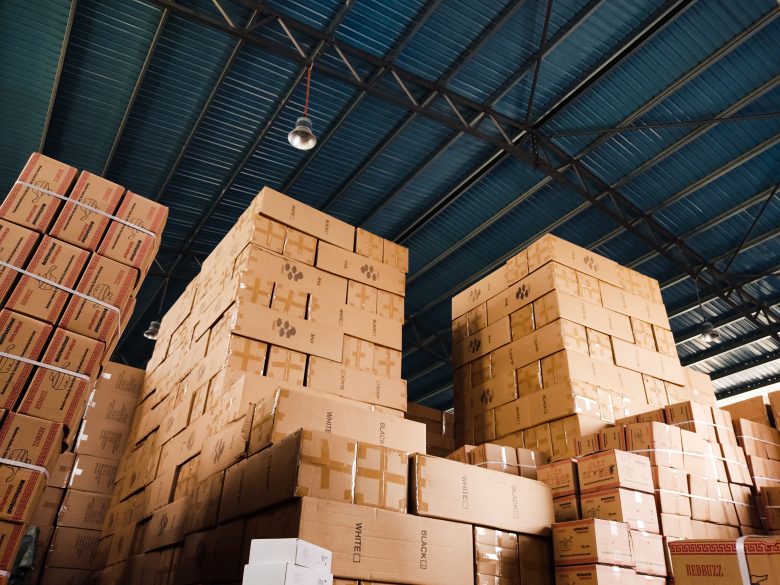
Every parcel you order spends its life inside one. The Pitney Bowes Parcel Shipping Index counted 161 billion parcels shipped worldwide in 2022 – roughly 5,100 every second, and 21.2 billion of them in the United States alone. The overwhelming majority of those traveled in a corrugated box, and industry estimates put corrugated’s share of e-commerce transport packaging at around 80 percent.
That box looks like the least interesting object in the supply chain. It isn’t. A well-built shipping box is a controlled shock-and-crush system, and the closer you look at how products actually get damaged, the less the damage looks like what people picture. The dramatic drop down a flight of stairs is not the main killer. Stacking pressure, humidity, vibration, and a box that is the wrong size cause far more grief – which matters, because every one of those causes is fixable before the parcel ever leaves your loading bay.
What a parcel actually endures

Between your warehouse and the customer’s doorstep, a package survives a small gauntlet. It is loaded, unloaded, and re-sorted, sometimes by machine. It rides in a trailer vibrating at highway speed. It sits at the bottom of a stack that can grow taller with every stop. It waits on a tarmac in July or a frozen porch in January. And at the last mile, it is dropped, tossed, or stacked under other parcels a human being is carrying up stairs.
Rough handling is real, but it is not random. A peer-reviewed study published in BioResources in 2025 (Holmvall & Holmgren) shipped boxes through a real distribution chain and found that damage accumulates step by step along the route – a box arrives damaged not because of one catastrophe but because of many small insults stacking up. The researchers even showed that a given delivery route can be characterized by a single figure they call a “characteristic drop height”; for the corridor they tested, it came out at about 11 cm. That is the punch a box must absorb on that route, on average. Design a box to beat the characteristic drop height of your actual route, and most of your hole-and-crush problems disappear.
For businesses shipping bulky or delicate items that require more than standard parcel delivery, Shiply can help them compare transport options and find services suited to their shipment requirements.
Corrugated is engineered, not “just cardboard”
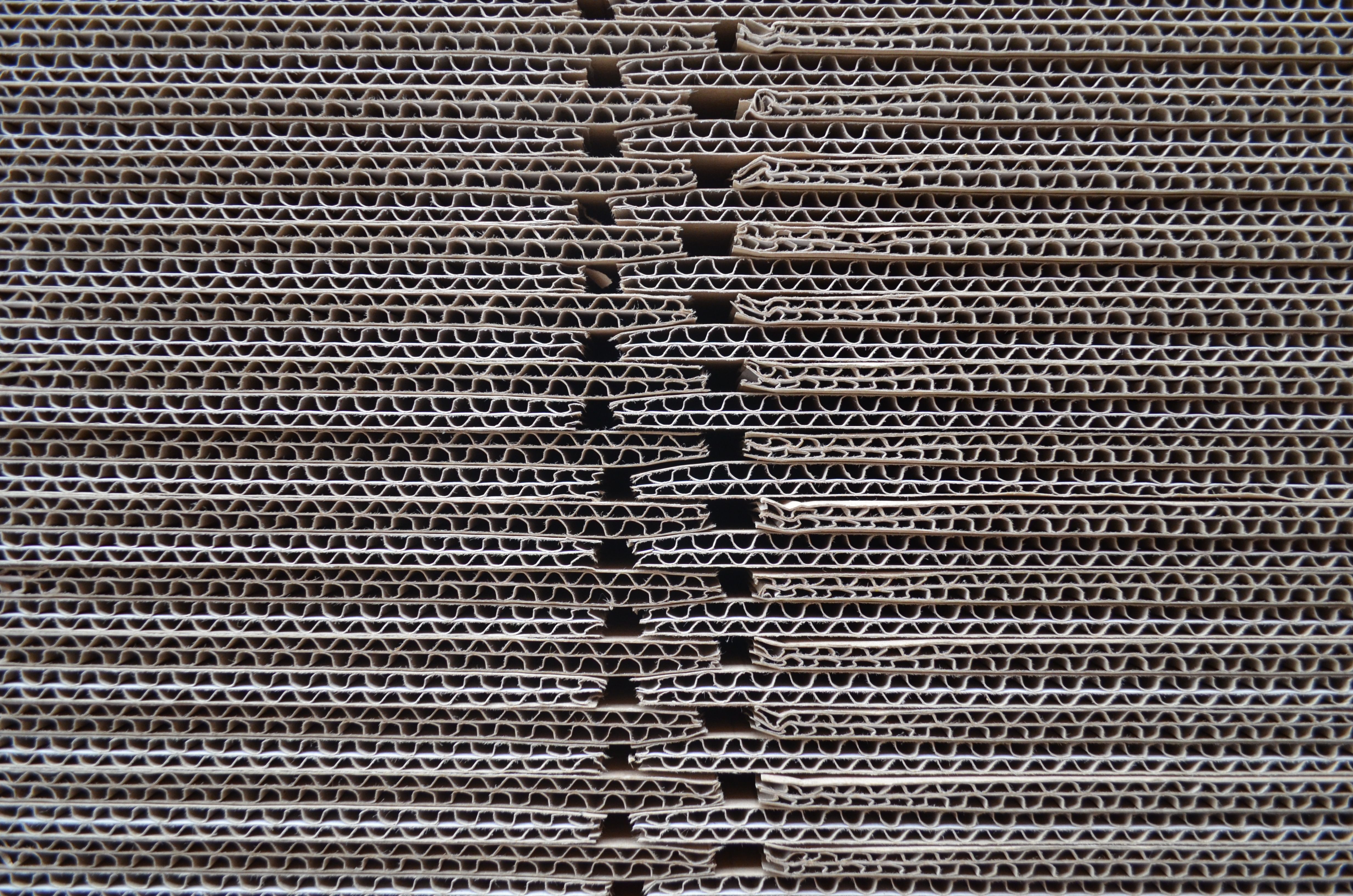
There is a reason the industry flinches when someone calls corrugated “cardboard.” Cardboard is thin and flat. Corrugated board sandwiches a wavy, fluted medium between two flat liner boards, and that wavy layer is the whole trick: the arches stand on edge like a row of tiny columns, resisting vertical compression far better than a flat sheet of the same weight could. It is the same structural logic as an I-beam – geometry doing the lifting that material alone could not afford.
The corrugation comes in flute sizes. B-flute and C-flute are the everyday workhorses for e-commerce cartons; E-flute is thin and crisp, used for retail and printed boxes; and BC-flute double wall – two fluted layers between three liners – is what you want for heavy goods, long sea freight, or anything stacked many pallets deep. That construction detail matters more than the thickness of the paper. Two boxes can look identical and perform completely differently.
Which is why every corrugated box sold in North America carries a certification stamp showing an Edge Crush Test (ECT) rating, the pounds of force the box edge resists per linear inch before buckling. A 32 ECT box is the common default for online retail. A 44 ECT or higher is the standard starting point for products over roughly 30 pounds. Read the number printed on the bottom of your box before you assume the box is adequate for what you are putting in it.
The walls stop crushing – the cushioning is inside

Here is the misconception that costs more money than any other in packaging: that protection comes from making the box tougher. It does not. The box wall resists compression and puncture; it does almost nothing to cushion a drop. When a box hits the floor, the product inside still has the same kinetic energy to shed, and if it is hard against the wall, that energy goes straight through the box into the product.
The cushioning lives on the inside, and it comes in two different jobs. Void fill – paper, air pillows, crinkle – stops the product from sliding around and rubbing against the walls. That prevents abrasion damage, not falls. Cushioning – foam, molded pulp, bubble wrap – actually absorbs the energy of an impact by compressing before the product does. Foam is engineered to specific “cushion curves”: the right density for a 2-kg product dropped from 70 cm is a calculation, not a guess.
This is also why the oversized box is the amateur mistake. A box two sizes too big lets the product rattle around, multiplies damage risk, and costs you extra in dimensional-weight shipping charges for air you are not using. A snug fit with minimal, well-placed cushioning protects better than a cavernous box stuffed with packing material – and ships cheaper. In my view, right-sizing is the single highest-leverage packaging decision most small sellers never make.
Storage and stacking are the real stress test
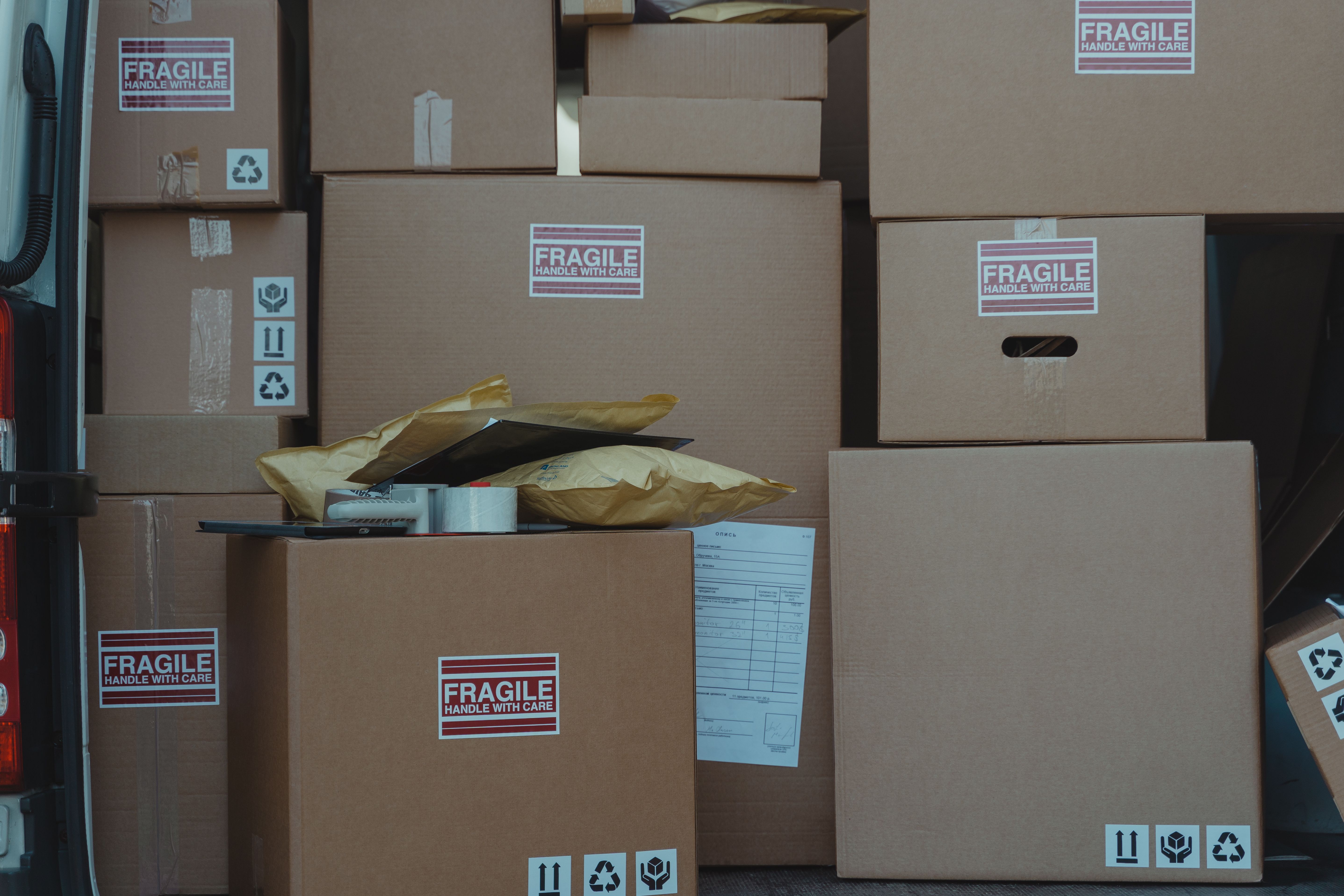
A product can be damaged long before it meets a courier. In a warehouse, the bottom box in a tall pallet column carries the weight of everything above it, and that load is not gentle: boxes lose compression strength under sustained pressure over time, and they lose a great deal more when the air is humid. Because corrugated is made of paper, moisture is its kryptonite.
How much? The Fibre Box Association, the US industry body, funded laboratory testing of 3,000 modern boxes at relative humidity levels from 30 to 90 percent. The results confirm what the old design tables assumed: a box conditioned at around 80 percent relative humidity keeps only about two-thirds of its dry compression strength. Ship through the Gulf Coast in summer, or store goods in an unsealed warehouse, and your 32 ECT box is behaving like a much weaker one by the time it reaches the bottom of a stack.
The practical rules are boring and they work. Keep storage dry and off the floor. Don’t let boxes overhang the pallet edge – overhang concentrates load and invites crushing. Rotate stock so boxes don’t sit under load for months. And remember the trailer itself is part of storage: a container that bakes in the sun all day is a low-humidity oven, and a cold one is a condensation trap.
Proof, not promises: testing a box before you trust it
Everything above is knowable in advance – provided you test. The International Safe Transit Association (ISTA) publishes the procedures the industry actually uses. Its 1-Series tests are quick integrity checks; its 3-Series are realistic simulations of whole journeys – ISTA 3A for parcels under 70 kg, ISTA 3B for less-than-truckload freight – where a package is dropped at set heights, vibrated, compressed, and conditioned to mimic the real distribution environment. The parallel standard ASTM D4169 covers the same ground for those who need a consensus-standard practice. Some retailers and carriers now require ISTA-level certification before they will accept a new package design.
The numbers make the business case. Suppose you ship 50,000 units a year at a 3 percent damage rate with a $40 average replacement cost: that is $60,000 a year bleeding out the back door. A lab test of your packaged product typically costs a few thousand dollars. If it lets you fix the two failure modes that caused most of those claims – a humid-route board grade that is too weak, or product shifting inside an oversized box – it pays for itself in the first month. My strong opinion: if you have never tested your packaging, you do not have packaging; you have a guess.
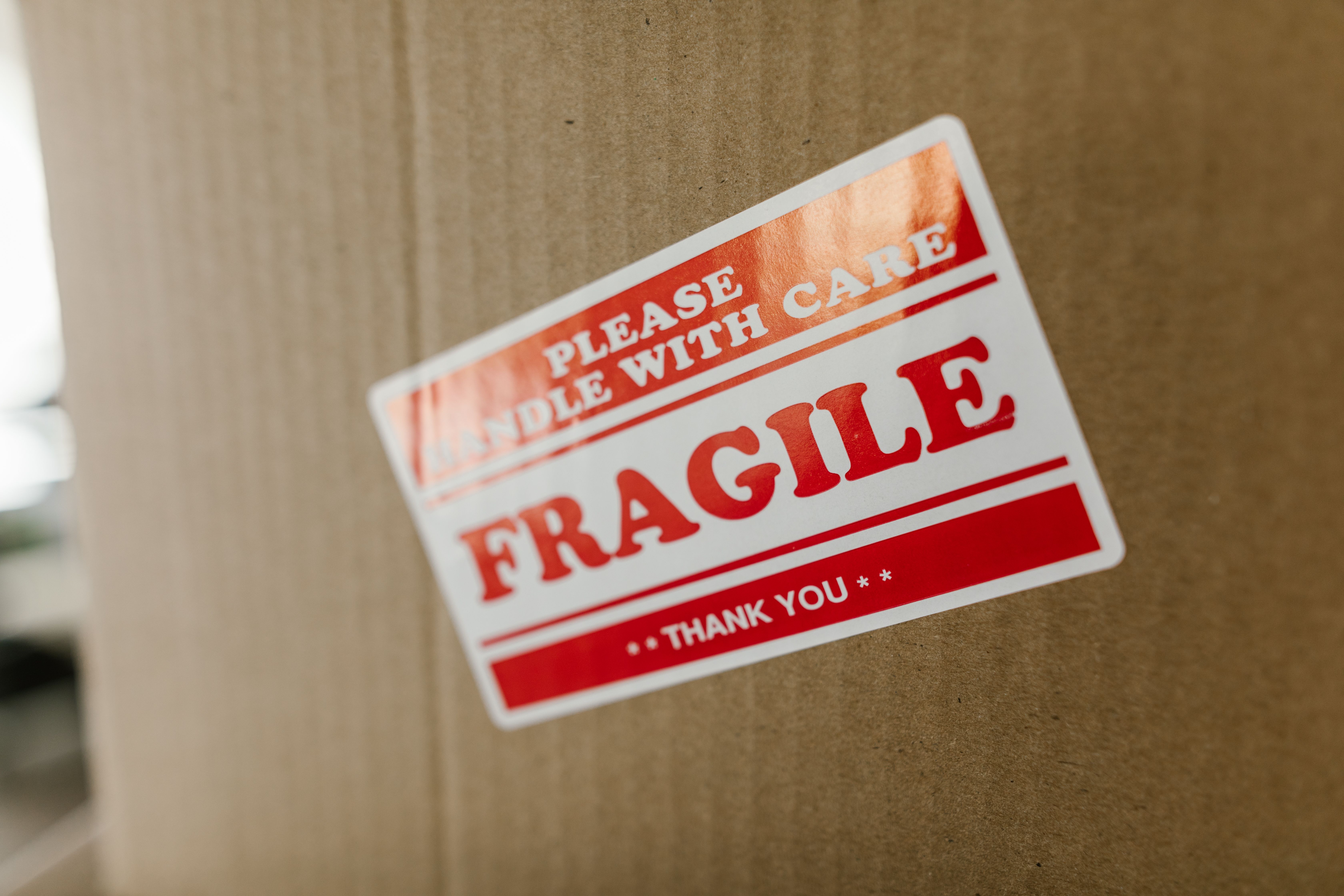
Once a design passes, the labeling does its small part too. Fragile and handle-with-care markings, “this side up” arrows, and clear stacking instructions nudge human handlers at the moments that matter – the last mile, the stairs, the sorting belt.
When a stock box won’t cut it
For many products, a standard RSC carton at the right ECT is genuinely enough. For others, protection has to be engineered around the product: fragile or oddly shaped items need custom inserts and dividers; high-value goods need tamper-evidence; some products ship with regulatory requirements layered on top of physics. Cannabis packaging is a good example – the product is often glass, must ship discreetly, and frequently has to meet child-resistant, tamper-evident, and labeling rules that a generic carton cannot satisfy. A specialist that lives inside one vertical can shortcut years of trial and error; cannacustomsupply, for instance, builds boxes for cannabis products where protection has to double as compliance, combining child-resistant structure with odour- and moisture-resistant materials that survive the same drops and stacks as anything else in the parcel network. When your damage cost is high or your compliance exposure is higher, that kind of specification-driven supplier beats a box catalog every time.
The pushback: are we shipping too much box?
There is a credible case that the industry overdoes it. Regulators in the European Union have concluded that enormous amounts of packaging waste exist purely to transport air, and in 2025 they did something about it. Regulation (EU) 2025/40 – the Packaging and Packaging Waste Regulation, or PPWR – entered into force in February 2025 and has applied since 12 August 2026. Its most watched rule, Article 24, caps the empty space in transport, grouped, and e-commerce packaging at 50 percent, with a deadline of 1 January 2030 at the earliest. And here is the detail that catches sellers out: void fill counts as empty space. You cannot stuff an oversized box with air pillows and paper and call it full. The regulator’s phrase is blunt – the goal is to stop shipping “minimum space on the transport packaging” dressed up as protection.
I think the regulators are mostly right, and it is worth saying plainly: padding an oversized box is not extra protection, it is expensive theater. The one genuine exemption many merchants miss is that if your product’s own sales packaging is sturdy enough to ship alone, PPWR’s empty-space rule does not apply to you. Notably, single-use corrugated shipping boxes are also excluded from the regulation’s reuse mandates – the EU explicitly carved out cardboard boxes, whose life cycles make rotation impractical. So the headline “boxes are being banned” story was never accurate.
The uncomfortable truth is that the two forces pulling on your packaging budget – damage claims on one side, empty-space and materials rules on the other – pull in the same direction. Both reward the same engineering discipline: the right board for the route, the right size for the product, and just enough interior protection to do the job.
Frequently asked questions
What part of a box actually protects the product?
The corrugated walls resist crushing and puncture; interior cushioning (foam, molded pulp, bubble wrap) absorbs impact energy; and void fill stops the product from shifting. Real protection is the whole system working together – structure, fit, and fill – not any single layer.
Do corrugated boxes lose strength in humidity?
Yes, significantly. Corrugated is paper, and moisture softens it. Fibre Box Association testing found a box at about 80 percent relative humidity retains roughly two-thirds of its dry compression strength, so humid routes and damp warehouses require a higher ECT grade or moisture-resistant board.
Is more padding always better?
No. An oversized box lets the product move and costs more to ship by dimensional weight. A snug fit with minimal, correctly placed cushioning protects better than a large box stuffed with void fill – and under the EU’s PPWR empty-space rules, that fill counts as empty space anyway.
What does an ECT rating on a box mean?
ECT stands for Edge Crush Test, the industry measure of how much vertical force a box’s edges resist per linear inch before buckling. A 32 ECT box is a common e-commerce default; heavy or tall-stacked shipments typically need 44 ECT or higher.
Is packaging testing mandatory?
Not by law in most places, but many carriers and retailers require ISTA-certified performance, and it is the only reliable way to know a design works before you ship thousands of units. ISTA 3A covers parcel shipments and ISTA 3B covers less-than-truckload freight.
How this article was put together
This piece is based on research conducted in early September 2026. The parcel volume figure comes from the Pitney Bowes Parcel Shipping Index (2022 data, released 2023); damage behavior and the “characteristic drop height” concept come from the 2025 BioResources field study by Holmvall & Holmgren; humidity findings reflect the Fibre Box Association’s box compression research; and all regulatory details were checked against the text of Regulation (EU) 2025/40 on EUR-Lex.
Testing procedures are described per the International Safe Transit Association’s published overviews. The article includes one link to a commercial packaging supplier. Damage-rate and cost figures elsewhere in the packaging literature vary widely and are often self-reported, so none are quoted as industry benchmarks. Recheck PPWR timing and box strength guidance as the regulation’s implementing rules land.