

Plenty of factory owners assume that modernizing a plant means gutting the whole thing. New robots, new controls, miles of wiring, weeks of shutdowns, and a capital bill big enough to make management hesitate.
That kind of project has its place, but it is not the only path forward. In many factories, the better first move is much smaller: connect an isolated machine, add monitoring to a troublesome motor, replace one aging controller, or collect data from a process operators currently judge by feel.
Those steps may look modest, but they can improve visibility, maintenance planning, and production decisions without forcing the plant to stop and start over.
The smartest upgrade is often the one that solves a real problem with the least disruption.
The Myth of the Big Rebuild

Automation is often talked about as though there are only two choices: keep running an old plant exactly as it is, or replace everything with a fully connected system. Real factories rarely work that way.
Most contain a mix of old machines, newer controls, manual processes, and equipment from several generations of vendors.
A phased approach can mean:
- replacing a controller that is becoming hard to support;
- adding sensors where operators lack visibility;
- connecting selected machines to a monitoring platform;
- leaving dependable mechanical equipment in place.
Rockwell Automation and Siemens both describe phased migration as a practical way to modernize legacy systems while planning downtime and spreading investment over time.
The goal is not to preserve old equipment forever. It is to replace what creates risk without throwing away machinery that still earns its keep.
Small Devices, Big Results
Some of the biggest payoffs come from the tiniest pieces of hardware. A little controller or a connected sensor can keep an eye on a machine all day and flag trouble long before anything snaps.
This is where micro-PLC applications really prove their worth, and companies like Blues have done great work showing how small, budget-friendly devices can pull older equipment into the modern age.
These units cost next to nothing compared to a full system. They tuck into cramped corners and start earning their keep right away.
Say a bearing begins to wear down, or a motor runs a touch too hot. The sensor catches it. A worker gets pinged. Now the repair lands on some quiet Tuesday instead of blowing up in the middle of a big order. Early warnings like that save real money.
Why Slow and Steady Wins
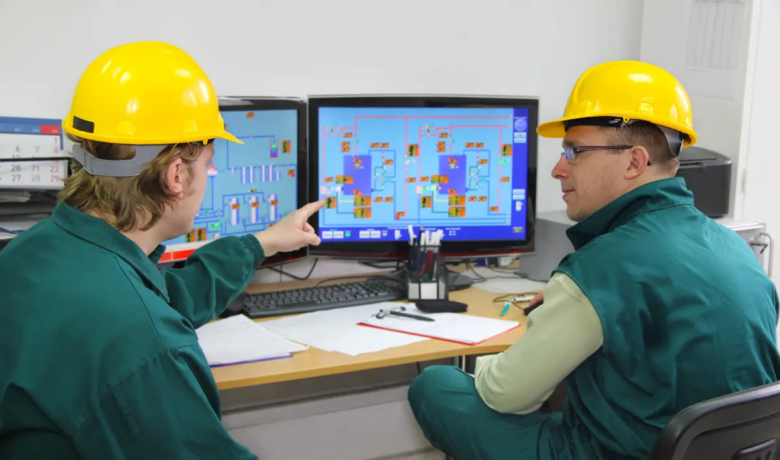
Phased upgrades give a factory room to learn. Instead of dropping an entirely new control environment on operators and maintenance technicians at once, the plant can introduce one change, watch how it behaves, and adjust before moving on.
People still have to understand alarms, trust the data, and know what action to take.
There is a financial advantage too. Management can test whether the first improvement delivers value before committing the rest of the budget.
That does not mean phased modernization is always cheaper. Rockwell notes that longer migrations can add engineering and support costs because old and new platforms may coexist.
The real advantage is control. A plant can schedule spending, training, downtime, and technical risk in manageable steps instead of absorbing all of them in one large project.
Focus on the Weak Spots First
The best first automation project is rarely the machine that looks oldest. It is the process that causes the most avoidable trouble.
A line that jams twice a shift, a compressor using more energy than expected, or a packaging station that creates repeated quality checks may offer a better return than upgrading equipment simply because its cabinet looks dated.
Start by asking operators and maintenance staff where time disappears. Then check downtime logs, rejected parts, maintenance records, energy use, and recurring alarms.
A useful first target usually has three traits:
- the problem happens often enough to measure;
- its cost is visible;
- a sensor, controller, or software change can realistically affect it.
If stoppages fall, repair calls drop, or output becomes more consistent, the improvement is easier to prove and the next decision becomes much clearer.
Measure Before You Automate
A plant can waste money by automating a process it does not understand. Before installing new controls, establish a baseline.
How often does the machine stop? How long does an interruption last? What does maintenance spend on it?
How many good parts does it produce per shift? Without those numbers, almost any upgrade can be called a success.
The baseline does not have to be sophisticated. A few weeks of reliable information may reveal the pattern. What matters is choosing measurements tied to the actual problem.
For a troublesome machine, that might mean:
- unplanned downtime;
- cycle time;
- fault frequency;
- temperature or vibration trends;
- maintenance hours.
NIST’s work on manufacturing monitoring emphasizes sensing, data infrastructure, and analytics for understanding when performance moves outside acceptable limits. Collect first, automate second is often the safer order.
Getting Your Team On Board
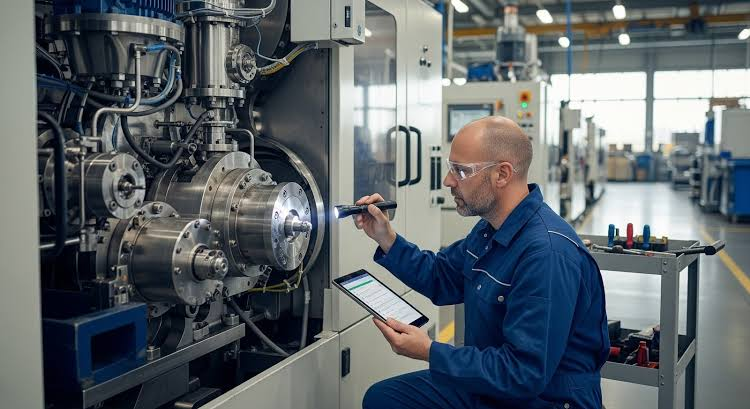
Operators usually know which machines misbehave long before a dashboard does. That is why modernization works better when the people running and repairing equipment are involved early.
Ask which alarms matter, which stoppages waste the most time, and what information would have helped before a failure.
Quick wins make the benefit visible. If a small monitor warns maintenance about rising temperature and helps prevent an inconvenient shutdown, the crew sees what the new system is for.
It stops feeling like technology installed for management and starts feeling like a useful tool on the shift.
Training should follow the same logic. Do not teach every dashboard function on day one.
Teach the signals people actually need, who responds to them, and what action follows. Useful automation should create clearer decisions, not more screens to ignore.
Connectivity Needs Guardrails
Connecting an older machine creates new visibility, but it also changes the plant’s risk profile. A device that once operated alone may now exchange data with gateways, servers, cloud services, or business networks.
Cybersecurity therefore has to be part of the retrofit rather than something added later.
NIST guidance for industrial control systems recommends risk assessment and measures such as authentication, authorization, change control, network monitoring, and protection against unauthorized software.
For a small upgrade, that becomes a few practical questions:
- Who can access the device?
- Does it really need remote access?
- How are credentials and updates handled?
- What happens if the connection fails?
The aim is not to make a sensor project unnecessarily complicated. It is to avoid turning a maintenance improvement into an unnecessary path into the control environment.
Conclusion
You do not have to bet the whole factory on one giant automation project. In many plants, the stronger path is a sequence of targeted improvements: find the recurring loss, measure it, add the smallest useful layer of control or visibility, and judge the result before moving on.
That limits disruption and gives operators time to adapt.
It also creates a better modernization roadmap. After several focused upgrades, management has evidence showing which technologies helped, which machines deserve further investment, and where a larger replacement may finally make sense.
Some systems will eventually need a full migration; no retrofit can keep obsolete equipment alive forever.
But a factory does not need to rebuild everything simply to become smarter. Modernization can be a series of good decisions rather than one enormous gamble.
Frequently Asked Questions
1. Does every smart factory upgrade need a cloud connection?
No. Some monitoring and control functions can stay local through PLCs, gateways, edge devices, or on-premises systems. Cloud connectivity is useful when teams need remote visibility, centralized history, or multi-site access, but it should serve a specific purpose. Blues describes configurations where the controller continues handling the local process while connectivity provides broader monitoring and historical information.
2. How long should a pilot run before the next upgrade?
There is no universal number of days. Run it long enough to cover normal operating variation across shifts, product runs, loads, and maintenance conditions. Define the success measure before the pilot starts, then expand only after the result is repeatable.
3. What documentation should be updated after a retrofit?
Update wiring diagrams, device inventories, I/O maps, network information, software or firmware versions, backups, and ownership of credentials. Small projects become hard to support when the knowledge exists only in one technician’s memory.